Pages

Monday, 26 September 2011

The Earth Charter - A summary

According to The Earth Charter Initiative Website (n.d.) The Earth Charter is a document that sets out four ethical principles that set out to achieve a just, sustainable and peaceful world society. The main aim through these principles is to instill in all individuals a sense of shared responsibility for the well being of all human life, non-human life and future generations.
Listed below are the four principles and a summary of their outcomes and indicators.

Principle One – Respect and Care for the Community of Life-  This principle aims to achieve a care and compassion for that which is beyond the individual self. It seeks to achieve a sense of respect and responsibility for all life, non- human and human and to achieve this an awareness of how systems on earth are interrelated needs to be achieved. It seeks to build democratic, peaceful and just societies through the building of the notion of human rights and fundamental freedoms. It aims to that we need to recognise the actions we partake in today have the potential to affect future generations and the need to hand down our values and traditions to the generations to come.

Principle Two- Ecological Integrity – This principle sets out outcomes and indicators that look at protecting and conserving biological diversity. It seeks to instill the notion that we have a responsibility for the actions we take and the potential impact these will have on the environment. Similar to principle one, we are to be aware of the interrelatedness of all biological forms on this planet and the possible affect one action we make in one area could impact another area. Through this awareness we are to consciously seek to do no harm to the environment and its life giving resources. It also mentions the importance of transparency of scientific knowledge and the recognition of traditional cultural knowledge that contributes to protection and conservation.

Principle Three – Social and Economic Justice – Social and Economic Justice looks at the need to eradicate poverty, social inequities like gender inequality, discrimination, inability to access education, and the lack of distribution of wealth within and among nations. It seeks to achieve trade that supports sustainability and the rights of those individuals who are involved in the trading process. It aims to make multinational businesses accountable in their actions and to be transparent in their activities.

Principle Four – Democracy, Non-Violence, and Peace- This principle seeks democratic processes, the involvement of all stakeholders in decision making processes, the freedom of individual expression and opinions, to gather in peaceful assembly and the right to a fair justice system. It seeks to eliminate corruption and empower communities so they are able to care for their environment. It aims to achieve education for all children and youth that allows them to feel empowered to achieve sustainability and that recognises the importance of moral and spiritual education in achieving this goal. It seeks to prevent the unnecessary suffering of all animals, domesticated and wild, at the hands of humans and aims to eliminate the uninhibited taking of non-targeted species. Lastly, this principle seeks to achieve cooperation between nations and people, to prevent armed conflict, to seek military resources being converted to achieve peaceful purposes including aims to help restore environments. Overall, to recognise the need for peace and to achieve peace.

Personal Opinion of the Earth Charter
When I first read the Earth Charter my impression was that it is a very idealistic declaration. This cannot be achieved. Perhaps I need to question where this cynical assumption is coming from, what thinking am I using in coming to this conclusion or, is this thinking being influenced by others?

The Earth Charter Initiative: Values and Principles for a Sustainable Future n.d http://www.earthcharterinaction.org/content/pages/Read-the-Charter.html 21 Sep 2011.

Friday, 23 September 2011

With all your power. What would you do?(Flaming Lips- Yeah Yeah Yeah Song)

Power and Partnerships
Observation
In class, we talked about power and the ability of partnerships to disseminate power if partnerships are affective. Although we mostly looked at power and partnerships in relation to stakeholder engagement, I find this notion can cross over into the formal education setting. In particular, the power within the partnership between student and teacher.
After reading through an excerpt from Friere’s (1972, 2003) Pedagogy of the Oppressed and an article entitled The Real Challenge of ESD by M.G. Jackson (2011) it became apparent that educators and consequently education systems have the ability to ‘oppress’ or ‘liberate’ (Friere 2003) learners. I have come to the conclusion, after reading these two texts, that ‘oppression’ or ‘liberation’ is dependent upon the predominant world view that the educator is operating in as well the educator’s philosophy on learning.
To first discuss Friere’s (2003) Pedagogy of the oppressed, Friere (2003) talks about two philosophies of education, one is the ‘banking’ approach to learning and the other is ‘Problem Posing’ approach to learning. According to Friere (2003), educators who follow a ‘banking’ approach to learning see learners as merely empty vessels with no prior knowledge, whose sole purpose is to sit, listen and absorb information. This type of philosophy does not view learning in terms of systemic thinking or critical thinking. In fact, the ‘banking’ concept sets out to achieve conformity and acceptance of dominant world views (something Jackson discusses). He calls this view of learning necrophilic. Without directly alluding to the notion of unsustainability, necrophily creates an unsustainable society. This is revealed in Friere’s (2003) reference to Fromm’s explanation of necrophily. ‘The necrophilis person is driven by the desire to transform the organic into the inorganic….he loves control, and in the act of controlling he kills life.’ (p.61) This quote from Fromm reveals the power imbalance between educators who hold this philosophy and their learners and consequently between humans and the living planet. The ‘banking’ concept overpowers learners and moulds them into the educator’s view of the world, to control. For control is what the ‘banking’ concept sets out to achieve and in doing so creates learners who set out to achieve the same goal in their interactions with the world.
In contrast, Friere (2003) wishes for an education system that uses ‘problem-posing’, this concept seeks to change the imbalance of power between the educator and the learner. As he states ‘The teacher is no longer…the-one-who-teaches, but who is himself taught in dialogue with the students, who in turn while being taught also teach’ (Friere 2003 p63). Unlike the ‘banking’ concept it seeks to create sustainability, ‘arguments based on ‘authority’ are no longer valid; in order to function, authority must be on the side of freedom, not against it’ (Friere 2003 p63). It fosters critical thinking and reflection on how we, as humans, interact with our world.
While Friere(2003) looked at the two different partnerships  between learners and educators, Jackson (2011) looks at how education systems are designed to perpetuate the dominant world view or unsustainability and offers a way to overcome this disempowerment of learners. He offers two steps to be taken. The first step he refers to as ‘transformative learning’ in which assumptions about how an individual views the world and how this relates to the dominant world view is questioned. New world views are visualised (similar to envisioning) and these new views are put into practice. The second step is developing new formal educational programs. According to Jackson (2011) ‘the purpose of formal education is to perpetuate an existing cultural model.’ (p.29) Jackson (2011) proposes new formal educational programs that are born from the development of alternative world views that come from the ‘transformative learning’ process. He suggests that they should encompass Sterling’s ‘third-order’ thinking in which learners question their current dominant social paradigm and develop new ways of viewing the world.
Jackson (2011) questions whether or not society would accept this transformation in education. I tend to agree with him as I find myself asking whether or not the power balance within his model of education is equal. Is there a hidden agenda from the educator? Then again, perhaps my questioning is influenced by the unconscious hold the dominant world view has over me?

Implication
There is a power issue in the partnerships between learner and educator and formal education and the dominant world view. The power can be balanced or tipping towards those with the control (educator and the dominant world view). Even I find I am influenced by the dominant world view that would suggest that there is nothing wrong with the current formal education system. Yet there is. When the power in partnerships is imbalanced like those between learner and educator or formal education system and the dominant world view, it creates unsustainable practices. Power has to be equal for Sustainable Development to succeed.

Action
I need to be more aware of how the dominant world view affects my thinking. I have to start thinking outside the box. I need to realise that our partnerships with each other and the environment is not equal. Power is imbalanced, this is evident in the social inequities present in society and our lack of regard for our species when it comes to meeting our own needs. I have to stop hesitating when thinking that perhaps there is nothing wrong with the current world view and that these new ways of thinking are too radical. Imbalances of power cannot be the right thing. Power needs to be equal in all partnerships, within formal education and outside. I need to bring this thinking to the table as an educator.

Friere P 2003 From Pedagogy of the Oppressed in A Darder M Baltodana and R D Torress eds The Critical Pedagogy Reader  Routledge, New York pp 57-68

Jackson M G 2011 The Real Challenge of ESD Journal of Sustainable Development 5(1): 27-31

Thursday, 15 September 2011

Critical Thinking and Consumerism

We may be drawn to this ad through the empathy and compassion we feel for the polar bear and the loss of its habitat due to global warming, but is this ad really about helping the environment?
Using Tilbury and Wortman's (2004) Critical Thinking we could ask these questions to find out what this ad is really selling us:
What are your first impressions of this advertisement?
What things in this advertisement caused you to form these impressions?
What assumptions do you hold about sustainability that this ad was able to bring to the surface?
What do you think you are really being sold?
What do you think were the assumptions of the advertisers in relation to Sustainable Development and audience context when creating this advertisement?
These questions may draw about what is really being sold in the advertisement as well as the hidden assumptions that we may hold about sustainability as well as the assumptions of the advertisers.

In contrast we could compare this advertisement with the one shown above:
In comparing the two advertisements we could ask:
What are the assumptions of sustainability behind each advertisement ?
Does this advertisement change your perception of the previous advertisement? Why/Why not?
Which advertisement do you think is truly showing sustainability or are do they both have hidden agendas?

De- Bono's (1995) Six Thinking Hats could also be used to bring about how the learner might be thinking about these advertisements and what is influencing their type of thinking. It could also bring about questions in regards to whether or not changing the way we think changes our perception. For example: if you are operating under the Red Hat when looking at these advertisements, one might perceive them as being both good advertisers who are trying to do their bit on the quest for sustainability as the polar bear brings out an emotional response, particularly with the polar bear hugging the man in the first ad. However, if we change our view and look at them from Black Hat thinking one might become skeptical about the ads and wonder what really is the message behind the advertisements.

De Bono’s Six Thinking Hats - Creating Critical and Reflective Thinking.

Taken from http://www.workplacehealthcare.co.uk/blog/wp-content/uploads/2011/03/de-bono-hats.jpg
According to Tilbury and Wortman (2004) Critical Thinking and Reflection ‘challenges us to examine the way we interpret the world and how our knowledge and opinions are shaped by those around us.’ (p. 32) they also suggest that it challenges us to question our current way of thinking. I believe De Bono’s (1995) six thinking hats is a tool that can be used to start learners thinking about the way they think. This also ties in with Bennet’s (2006) creating Multiple Historical perspectives.
Although De- Bono (1995) may have created the six thinking hats to develop an individual’s creativity, I have come to interpret the six thinking hat system as a way to develop an awareness of how we think and how our thinking can influence the way we perceive a given situation.
In the six thinking hat system each coloured hat represents a different way of thinking.  WHITE Hat = Facts/ Figures/ Information: Thinking about what information do I have and what are the facts about what I am thinking about.
BLACK Hat = I like to call this hat the What if…? Hat, this hat looks at what could be the negative consequences, where should caution be taken in the given situation.
YELLOW Hat = Positives: This hat requires thinkers to look at the positives of a situation. I like to think of this hat as the ‘optimistic’ hat.
RED Hat = Emotions/ Feelings: Looking at a situation through how the thinker is feeling towards the situation.
GREEN Hat =  Creativity/ New Ideas: This hat requires thinkers to think about the possible eventualities of the situation. What new ideas could come out of this situation?
BLUE Hat= I like to refer to this hat as the Metacogntion hat (Thinking about the way you think). This hat requires learners to think about how they are thinking during a situation. It creates awareness of an individual’s current thinking.

I believe these hats are a good way to create an awareness within individuals of their own thinking. Which, in turn, can lead to reflective thinkers. I also believe it is a useful tool in creating holistic thinking as it can be suggested to learners that the way we think affects the way we interpret a situation. If, as individuals, we use all six thinking hats when looking at a situation then we are more likely to have a more valid view of the situation as we are not being influenced by one form of thinking, we are looking at it from multiple view points.
Activities using the six thinking hats may involve learners being given a scenario or situation for example Australia’s Carbon Tax or a new development being built next to a protected habitat. Learners may be given a particular hat to think under, using their hats they are required to note down the ways they might view the situation or scenario from that way of thinking. Following this learners share their notes on their particular way of thinking, this may lead to a discussion about whether or not learners can see themselves falling under one particular hat in their thinking, discuss how their view of the situation is influenced through thinking under their given hat, discuss what type of view would occur if an individual wore all six hats.

de Bono E 1995 Exploring Patterns of Thought…Serious Creativity The Journal for Quality and Participation 18(5): 12-18.

Tuesday, 13 September 2011

If teachers and their students are not engaged in critical thought….education is likely to result in indoctrination rather than ethical insights based on core values such as acceptance..appreciation of cultural diversity, respect for human dignity and universal human rights, responsibility for world community, and respect for the earth. (Bennet 2006)

Multicultural and Global Education (is it another name for EfSD?)
Observation
The above quote is taken from a chapter of a book entitled Comprehensive Multicultural Education: Theory and Practice. In this chapter Bennet (2006) looks at developing lessons that are inclusive of all cultures and their perspectives. She mentions ‘rethinking the curriculum’ and states six goals that Multicultural and Global Education seeks to achieve. These goals are : 1. Develop Multiple Historical Perspectives (awareness of all cultural viewpoints) 2. Strengthening Cultural Consciousness (An awareness that a personal view is not universal, that an individual’s point of view is influenced by their culture) 3. Strengthen Intercultural Competence (An awareness of the assumptions that may be held about other cultural backgrounds, emphasis on creating compassion and empathy.) 3. Combat Racism, Sexism and all form of prejudice and discrimination 6. Increase awareness of the state of the planet and global dynamics 7. To build social action skills. She also states that lesson planning in Multicultural and Global education follows the same process as effective lesson planning, however ‘multicultural and global lessons are based on a special rationale that clarifies the instructor’s values and goals (Bennet 2006 p.326).
As well as the mentioned goals, Multicultural and Global education emphasises Critical Thinking. This can be seen in the quote given at the start of this reflection. According to Bennet (2006) critical thinking is ‘essential’ in Multicultural and Global education as it makes learners aware of their own assumptions and biases. Critical Thinkers question given ‘truths’ and seek to see a given situation from all perspectives.  It also causes learners to stop and think about how they are thinking (metacognition).

Implication
It is interesting to note that although Bennet (2006) does not refer to Sustainable Development, in a sense her Multicultural and Global education is Education for Sustainable Development. Although there is more of an emphasis on understanding and awareness of cultures and beliefs, she appears to acknowledge that social and cultural equity goes hand in hand with environmental degradation, governance and development. Her last goal is also ‘Social Action’; a goal that is also of Education for Sustainable Development. Critical Thinking is emphasised, this is an element of Education for Sustainable Development.
It is also interesting that Bennet (2006) suggests ‘rethinking the curriculum’, something that is suggested by Sterling (2004) in Tilbury and Wortman’s (2004) Engaging people in Sustainability and Jucker (2011).
Does this further validate a need for a new ‘Educational Paradigm’?

Action
I find at times when I hear a suggestion for a ‘shift’ in societal norms, like the current practice of education, there is a moment of hesitation. I believe this moment of hesitation comes from the fact that as a ‘critical thinker’ I question something that is suggesting a radical shift. The reasoning behind this questioning is that like myself, who holds assumptions and biases, could these radical shifts also hold assumptions and biases? Having said that, I do believe we need to be looking more deeply into what is learnt in the current education system. Living in a world where there is still social inequity and degradation of the environment cannot be the right way of living. Why shouldn’t we not live and learn in a world that fosters critical thinking, social equity, care for the environment and social action? Would an ‘education paradigm shift’ to this be an infringement on our rights and freedoms? On the contrary, I think it would create deeper learning experiences and, as suggested by Bennet (2006) compassion and empathy.

Bennet C I 2006 Strengthening Multicultural Perspective in Curriculum and Instruction in Comprehensive Multicultural Education: Theory and Practice eds C I Bennet,  Pearson, Boston pp319-461.

Thursday, 8 September 2011

Resources taken from an Education for Sustainability Workshop

The following activity involved learners reading the definitions of Sustainable Development and highlighting the key words that resonated with the learners. Learners then have to state what Sustainability means to them.

The following image is of a handout given that shows how values, attitudes and behaviours are related and how these affect Sustainability.
These three activities followed from the above hand out. The first activity required learners to think about what is most important to them. Using the list of values on the sheet, learners were required to write down three of their three most highly valued values. Following this activity, learners were then required to analyse one of their core values.


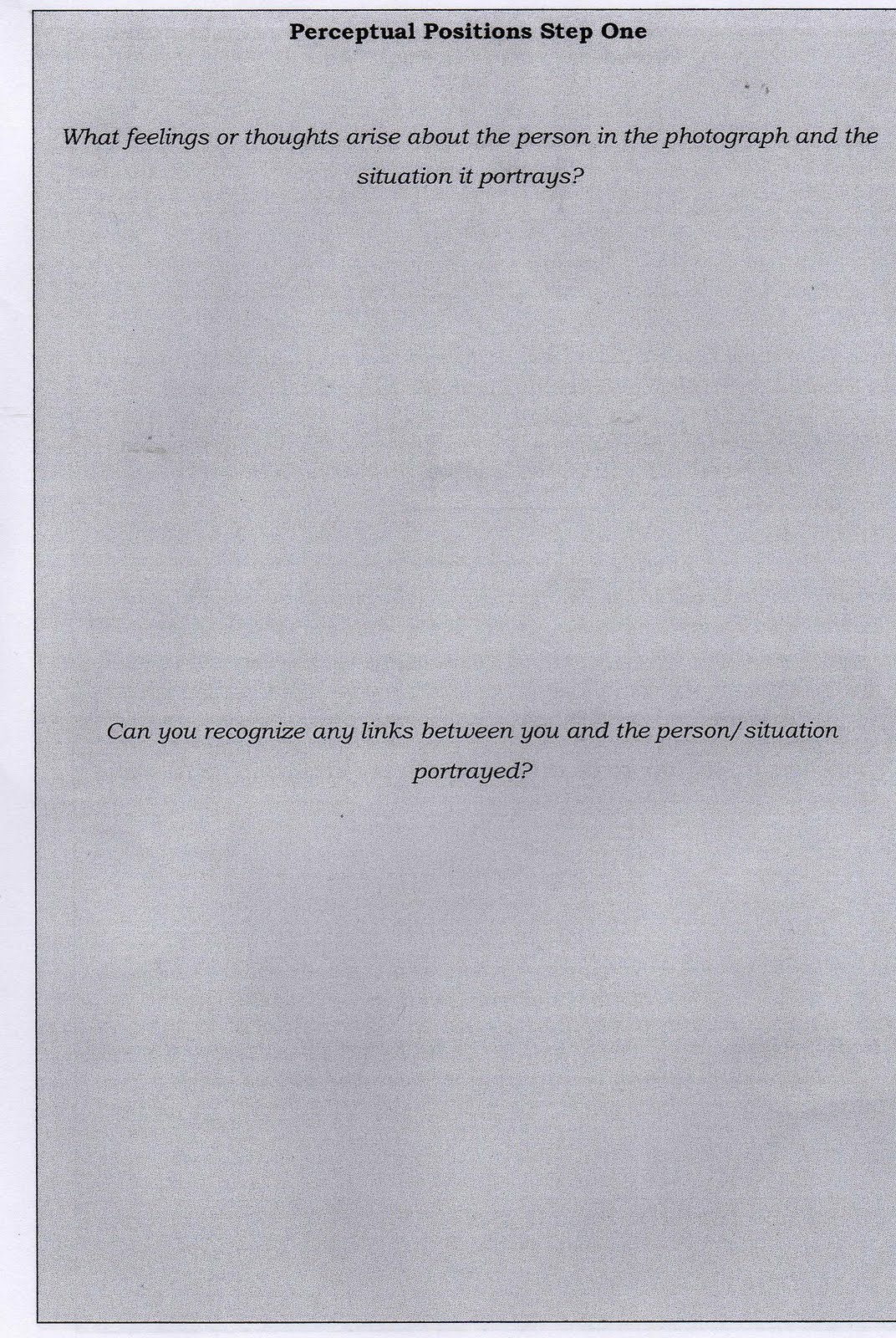
The last activity involved working in a pair. Learners were required to take one of two positions. One of the learners had to hold a photograph of a situation. They were first required to be an outsider looking onto the situation. The other learner asked them the questions in Step One. The learner holding the photograph was then required to put themselves in the position of those in the photograph and answer the questions in Step Two. The third step involved the learner holding the photograph to reflect on the experience.


These activities were apparently taken from Murray P 2011 The Sustainable Self : A Personal Approach to Sustainability Education

Wednesday, 7 September 2011

Resources taken from an Education for Sustainability Workshop

In May of this year I attended a workshop held at the Graduate School of the Environment, Macquarie University. The workshop, entitled Education for Sustainability, was run by Sandra Nichols and involved a two hour session looking at the concept of Sustainability and our personal perceptions of Sustainability. I have attached resources taken from this research that can be used when conducting Education for Sustainable Development.
This first resource is a list of practices an individual can take to achieve a sustainable lifestyle.

This second resource is of two pictures. We were required to give our thoughts of each picture. The picture depicting the ship, we were required to state what sustainability issues we could see in this picture. Responses were mainly in regards to the process of shipment being an unsustainable form of transporting goods. The reasons for this response ranged from the potential that the ship could be carrying oil, with oil being a natural resource that is at present depleting and with the possibility of the ship causing an oil spill. The use of fuel to transport goods was also mentioned, as well as the possible damage to the ocean floor due to anchoring, disturbance to marine biodiversity and the possibility of pollution from the waste of those on board.
The second picture depicting the blurred image of a car traveling into a deserted area where there is no fuel, we were required to state what we thought was the message behind the image. Personally, I stated that I believed the message was that as a society we a traveling fast into the future without stopping to have a look at the potential consequences of our actions. The blur symbolises this lack of reflection as well as our lack of a vision for the future. The desolate landscape reveals that the future is lacking in resources and we are traveling into this future with one resource that will eventually run out. This is seen in the image of the sign post.